
Plates from the novel
Bevo’s Art
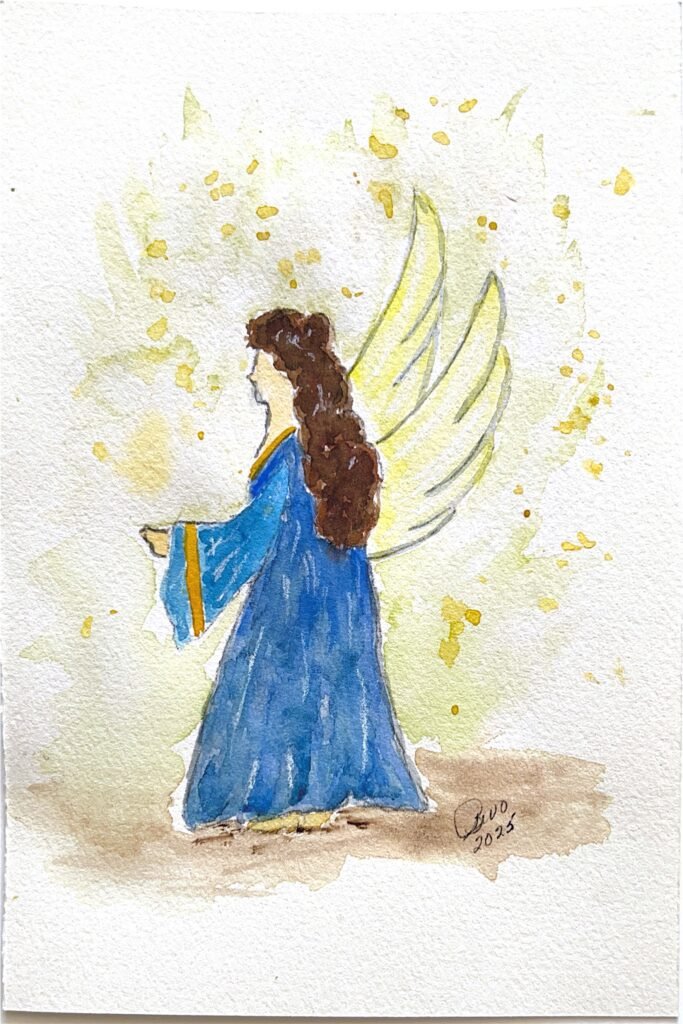
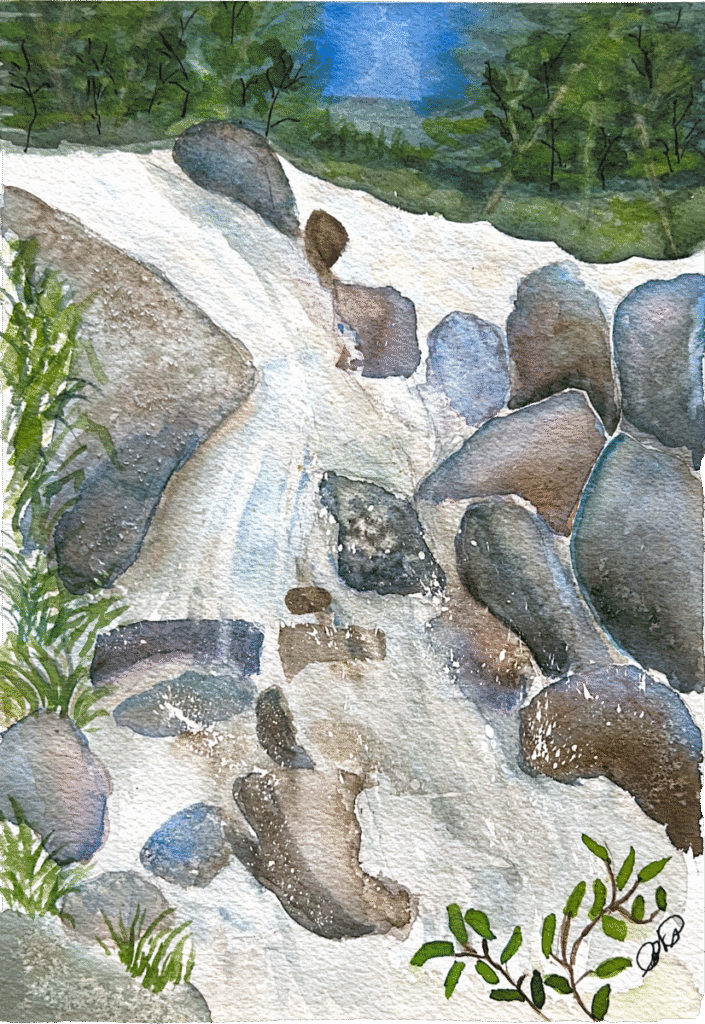
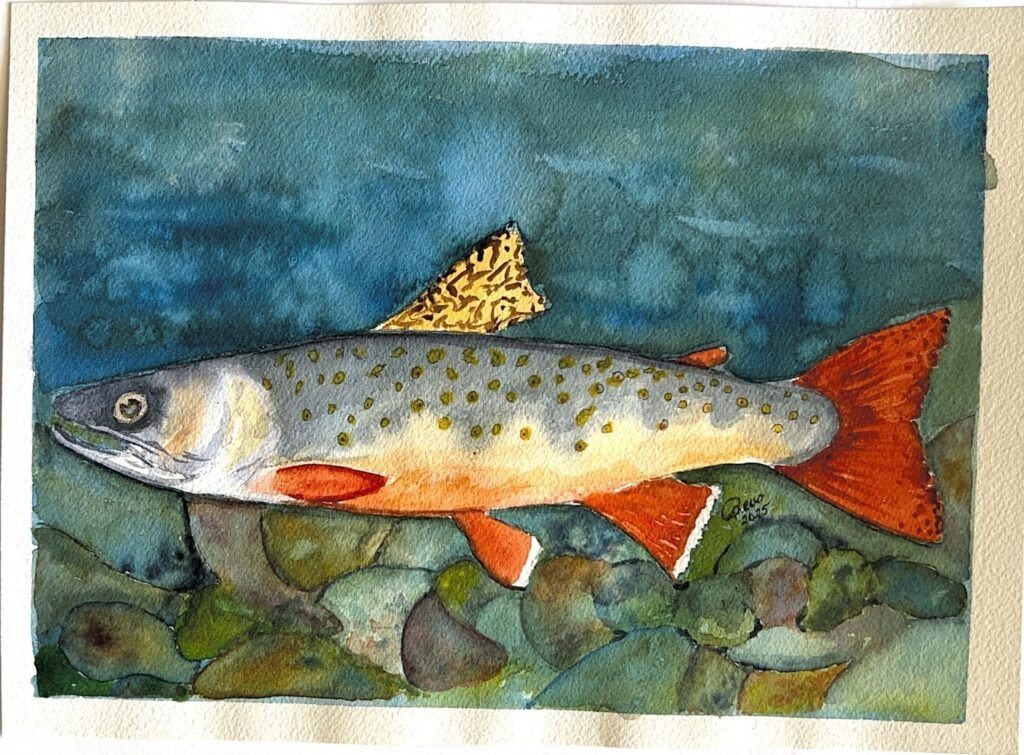
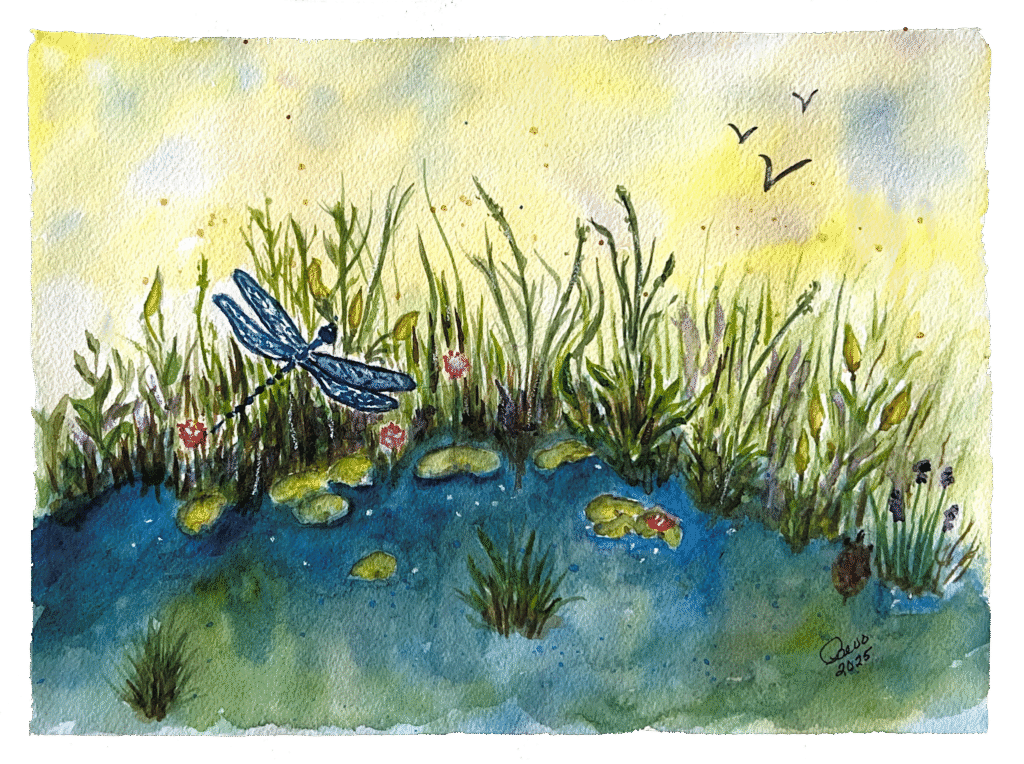
Bevo is a central character in Upstream. She is married to narrator Bishop Bryant. Throughout the novel, her art depicts key characters, places, and events that give readers a visual memory of the story.
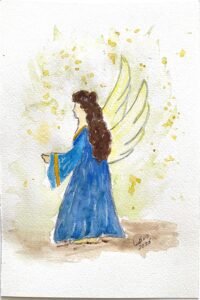
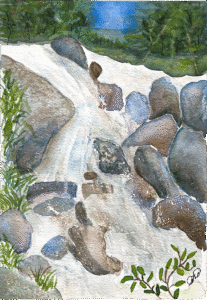
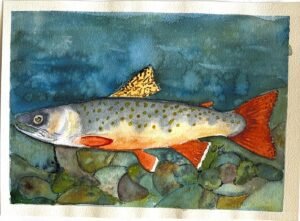
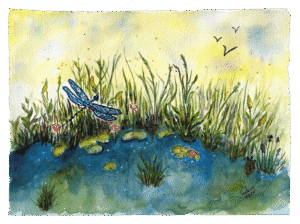
The Angel opens Chapter 11 because Bishop introduces us to Eve, a daughter who died as an infant and who appears to him on some nights posing statements or questions that push him to resolve mysteries in the plot. The Waterfall introduces Chapter 15 and represents the arduous, dangerous, and deadly journey that Noa led so that the speckled trout reached safety oppstrøms (upstream). Aksel, who appears throughout the novel, has his own Chapter 1, where you’ll learn about him, his family, and his species’ importance to the story. The Bog at the outset of Chapter 12 illustrates one of the bogs and fens in and near the Celo community where the narrator’s fly-fishing, former opera-singing friend Harrison lives.
To view any of these paintings in a larger size, just see the plates below.
Plates from the novel
The four plates
Four paintings open chapters of Upstream: the Angel, the Waterfall, Aksel, and the Bog.
A curiosity you may enjoy
In the novel, one of the author’s step-sons, John, reads about bogs and fens, which he calls “ferns.” He can’t wait to tell Bishop, whom he calls “B,” everything he’s read:
B, you have a lot to learn about these bogs and ferns,” John exclaimed. “Listen to this. They are made of peat, which is basically rotted plants. It was used by Vikings to build their homes, called hjem in Norwegian. Peat was used to build houses until the twentieth century. I thought you’d like that since you say you are part Norwegian, although you don’t look anything like a Viking to me. There are lots of strange plants and animals in bogs and ferns, which are usually found in the headwaters of mountain streams. You can find four-toed salamanders there. They eat sphagnum all the time, sort of like me eating hamburgers all the time. The smallest turtle in North America lives in these places. A giant one is only 4.5 inches long. They only lay one to three eggs a year. The plants are cool too. “A lot of them are cannibals that eat insects. There is another called a lady’s slipper that basically marries a fungus so the two can produce a seed that takes seventeen years to become a flower. That’s about the same amount of time that it takes to raise a kid. There is this rare damselfly called a jewelwing in bogs and ferns. The woman damselfly flits around looking for a mate, kinda like Mom, and lays eggs in the muck. The man jewelwing guards his wife so that nobody can mate with her, just like you, B!