The novel
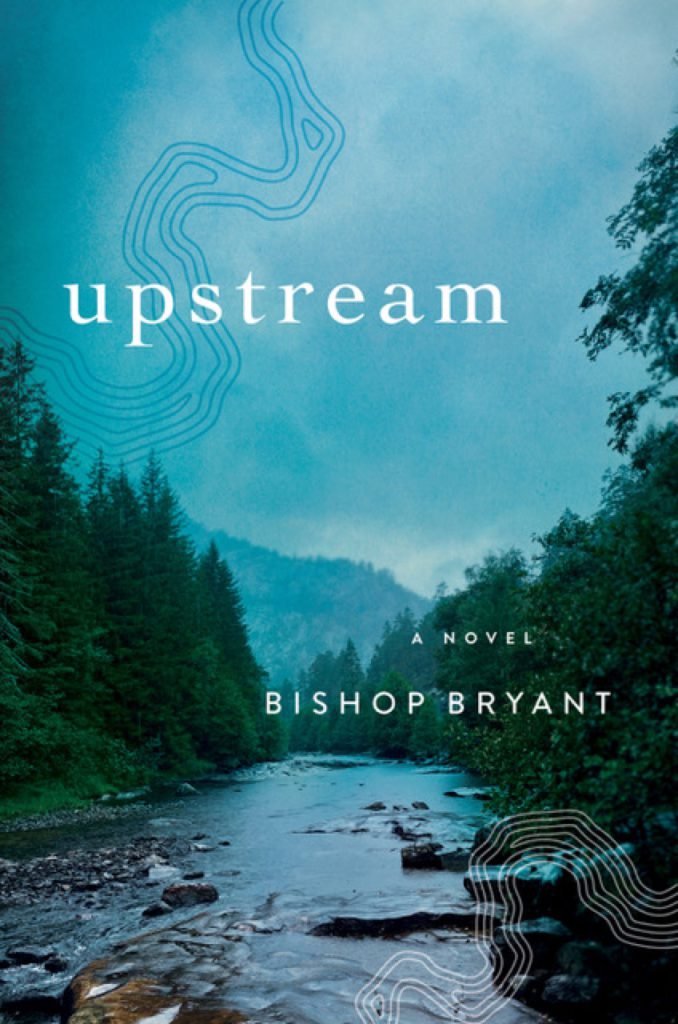
Upstream
A man searches for spiritual identity and solves the mystery of a girl’s disappearance while involved in a land trust lawsuit.
- Setting
- Burnsville, North Carolina, in the Black Mountains
- Told by
- Bishop Bryant, a fisherman who escaped upstream from life as an urban lawyer
- Illustrated by
- Bevo, in four paintings that open chapters
- Status
- Available for preorder
- Release
- Tuesday, February 23, 2027
On judgment day, you may find yourself with tears flowing down your face as God recites to you, by heart, the poems you might have written had you been faithful.W. H. Auden, About the House
Here is a brief sample from the beginning of the novel.
Prologue
On April 5, 1851, in the mountain town of Burnsville, North Carolina, thirteen-year-old Elsie Ranks disappeared. The day before, her wealthy father had told her she couldn’t continue seeing fifteen-year-old Joe Bennett, son of the mayor and local rake. Two years later, on May 12, 1853, young Bennett skipped school and also disappeared.
Rumors and opinions of what had happened to the teenagers were favorite topics in town. Over the years, old theories would fade after time and dissipate like morning fog, replaced as new ideas rolled in. No other subject garnered more interest, except speculation about the date Jesus would return.
Intrigue about the missing children traversed decades until, in the early 1980s, it reached newcomer Bishop Bryant, a beleaguered Charlotte lawyer who had recently relocated his family to a Yancey County åamodt, the Norwegian word for the place where two rivers intersect. He intended to create a new life upstream. But what awaited him was not at all as he expected.
Two Mists
We human beings instinctively regard the seen world as the ‘real’ world and the unseen world as the ‘unreal’ world, but the Bible calls for almost the opposite.Phillip Yancey, Disappointment with God: Three Questions No One Asks Aloud
We live in both the natural and spiritual world—two mists that swirl in and out of each other, one polluting and the other cleansing, forming waters. These mists are the souls of streams that travel from separate valleys, merging into a single river. They ebb, flow, turn, combine, and separate. Each influences the other. Our lives are the outcome of going up or down one, or in and out of one, and then into the other. And back again. Born again, dead again, but not forever.
All the choices you will ever make come down to this. You will go upstream at times, then downstream at other times. The direction you go as your life changes is not right or wrong, moral or evil, just or unjust, complex or simple. It isn’t the force of the flow but how you steer the currents that makes the difference. It is what you are driven to do by God, or on your own, because of or despite others, or all of that.
Downstream for trout brings more murky water, food variety, and danger from diverse predators, pollution sickness, and difficult spawning due to silted riverbeds. Upstream for trout provides smaller, clearer water, less available food, but less danger from predators and fewer spawning competitors in pristine places.
Trout always return upstream to where they were born, while some part of each of us flees downstream from our home or the memory of it.
Downstream for us, as for trout, is being jostled and swayed by every current that crosses our path. It is going where we never meant to go, influenced by meaningless events. It is how we lose ourselves in a sacrifice to culture, norms, and expectations, never writing the poems that were intended. Upstream is staying on the designed course, so we end up being who we were intended to be, where we were supposed to be.
Upstream is harder in the beginning and easier in the end. It is returning to where you were created. Downstream is easier in the beginning and harder at the end. It is never returning to the place you started. Your life, your choice—but every current that you swim impacts you and those who swim with or near you. upstream is an allegory of the places I swam. It is the story of the materialism that engulfs our world, even the tiny mountain town of Burnsville. It is also a tale of the spiritual, the Black Mountains wilderness, and the blue streams surrounding Burnsville, particularly Locust Creek, where I once lived.
Plates from the novel
Paintings by Bevo
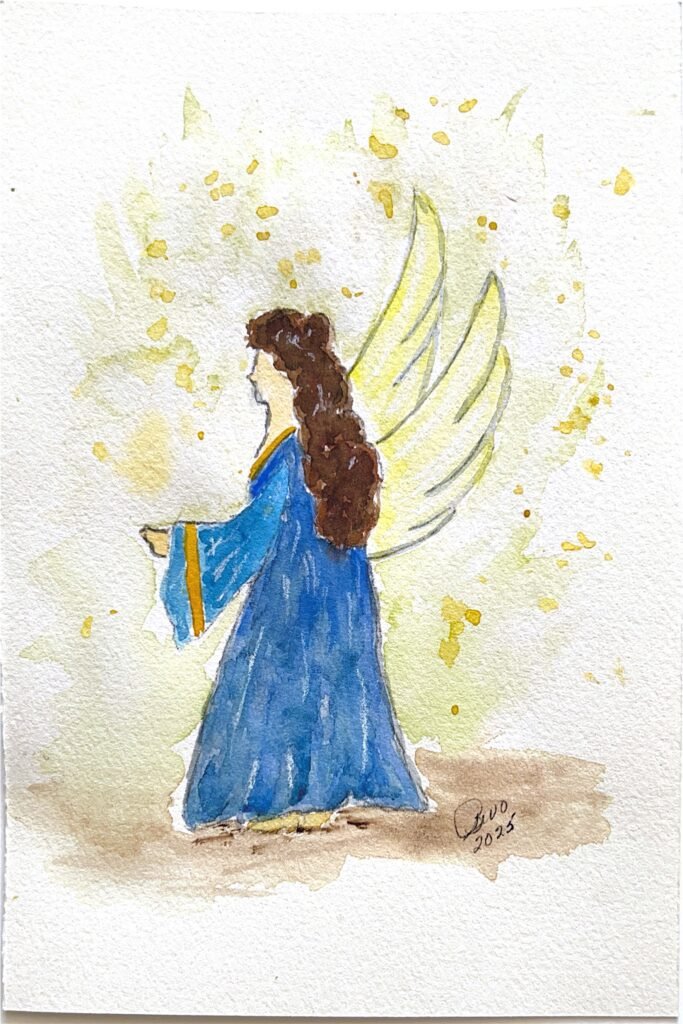
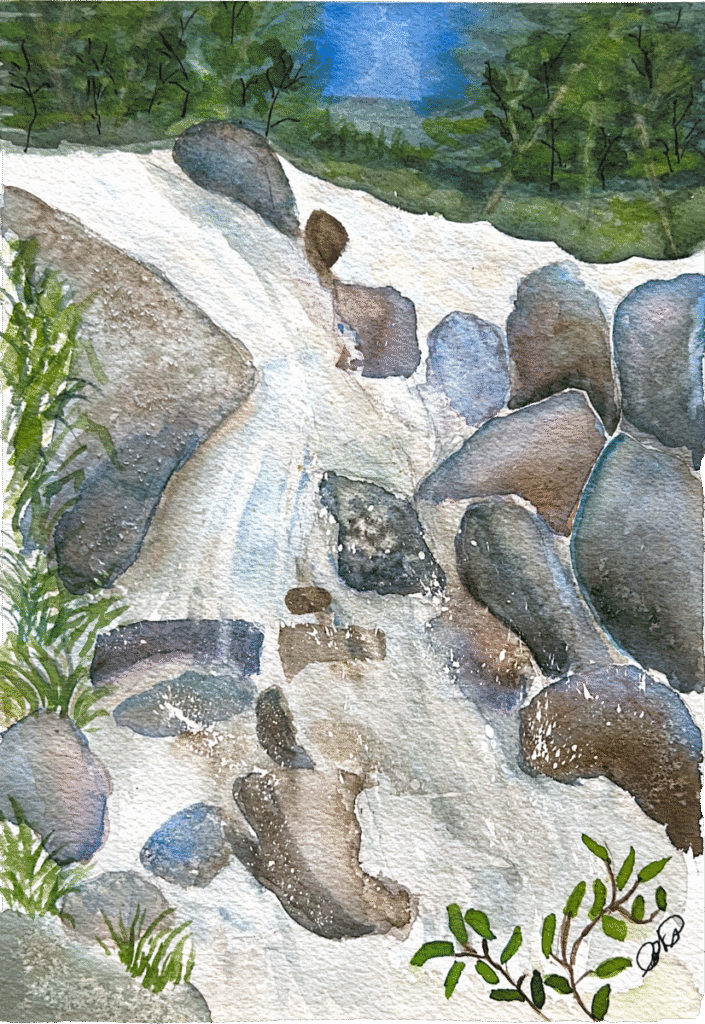
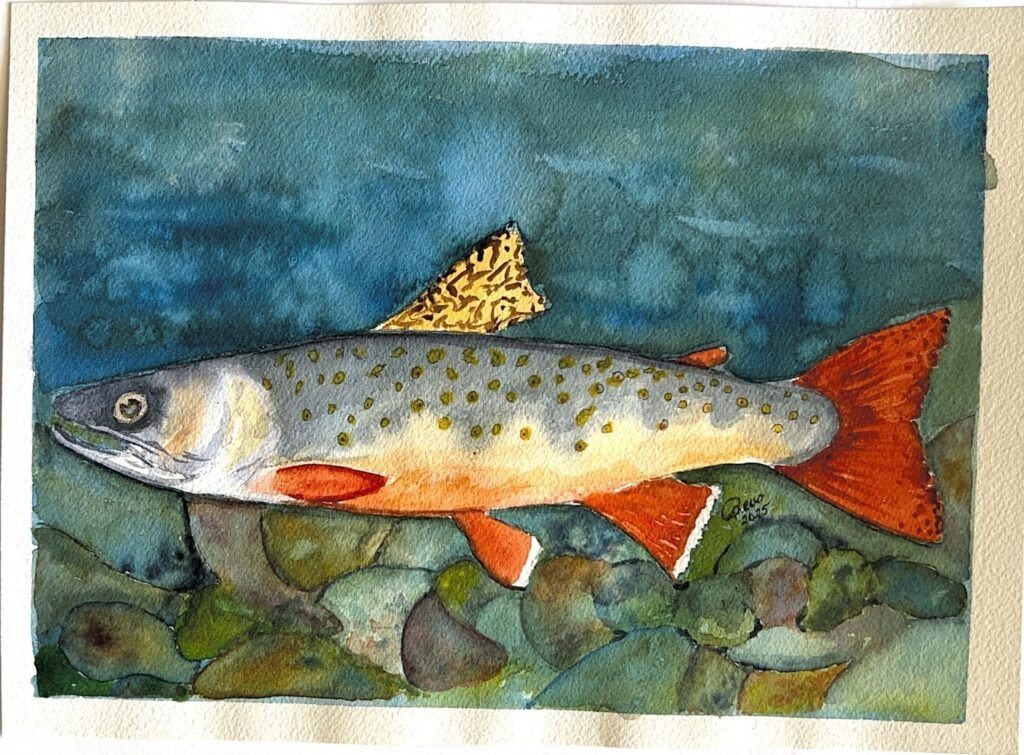
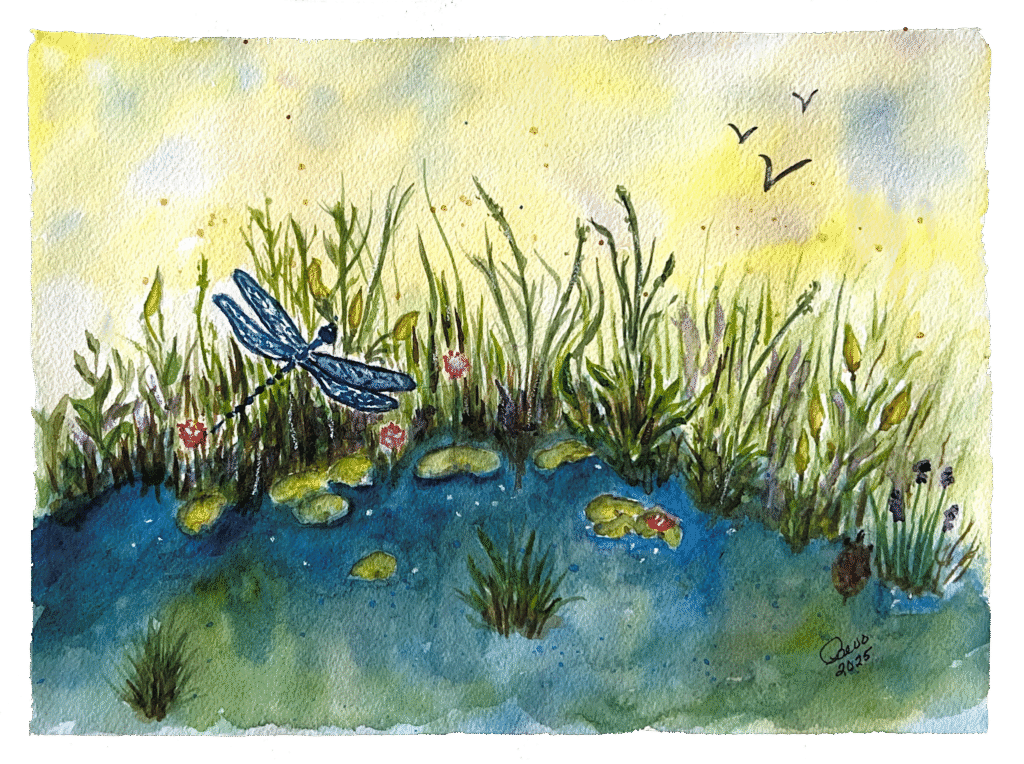
Four paintings open chapters of Upstream: the Angel, the Waterfall, Aksel, and the Bog.